



AQA / GCSE
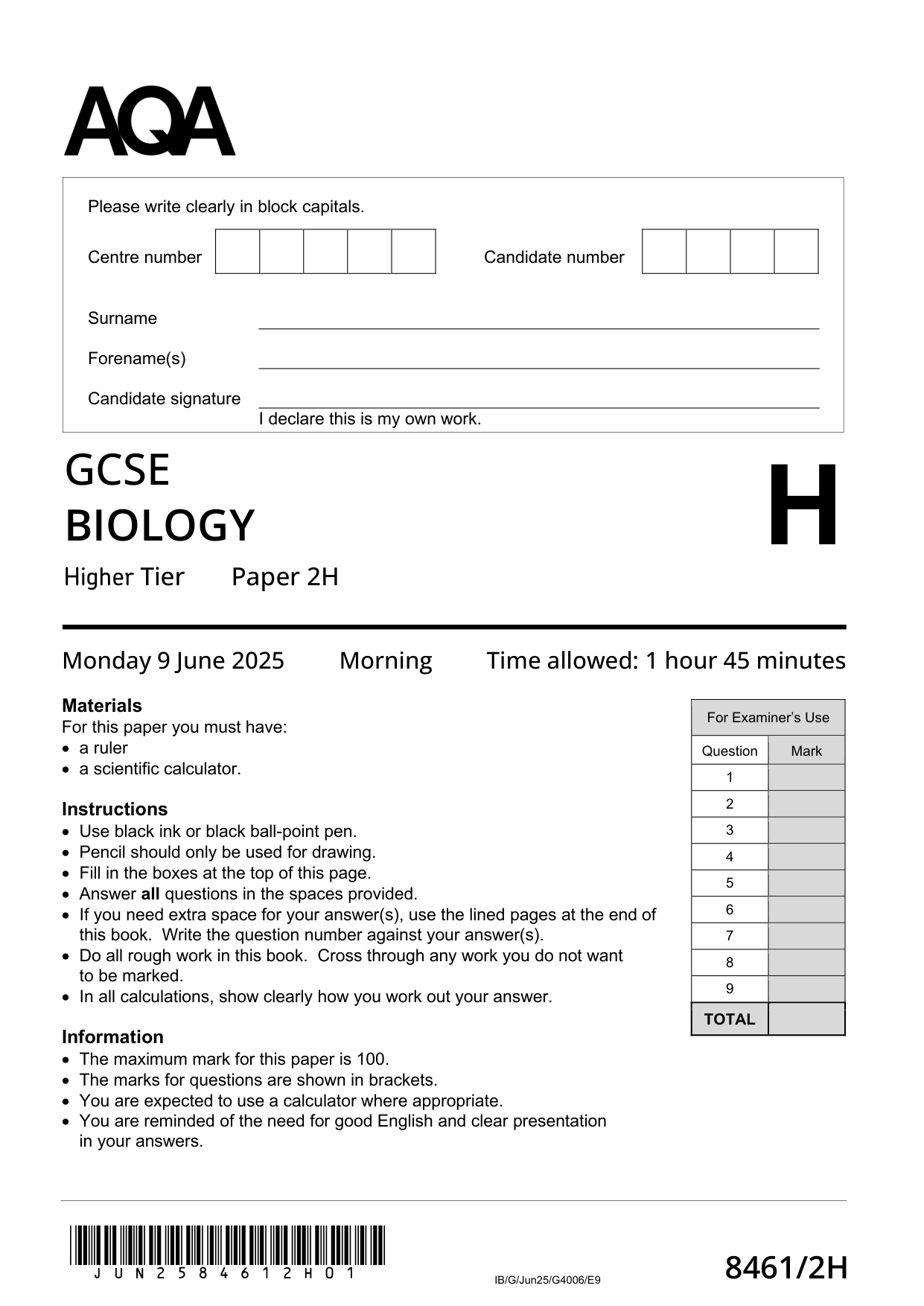
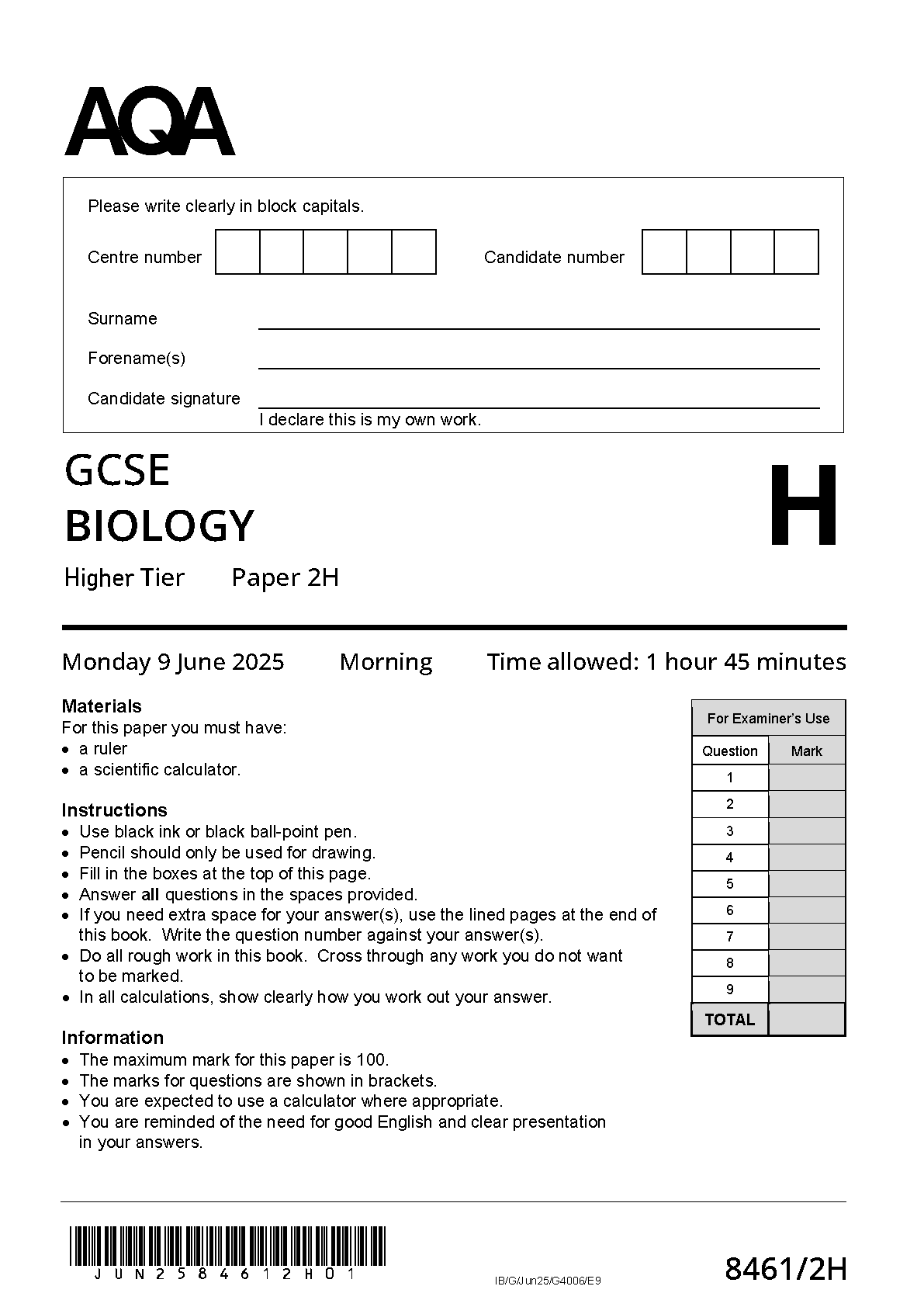
AQA GCSE Biology Paper 2 2025 Question Paper
Get the official AQA GCSE Biology Paper 2 Higher Tier (8461/2H) question paper from the **9 June 2025 morning exam** — the exact paper used across UK exam centres. This paper is worth **100 marks** and covers key topics including ecology, evolution, inheritance, variation, and response control.
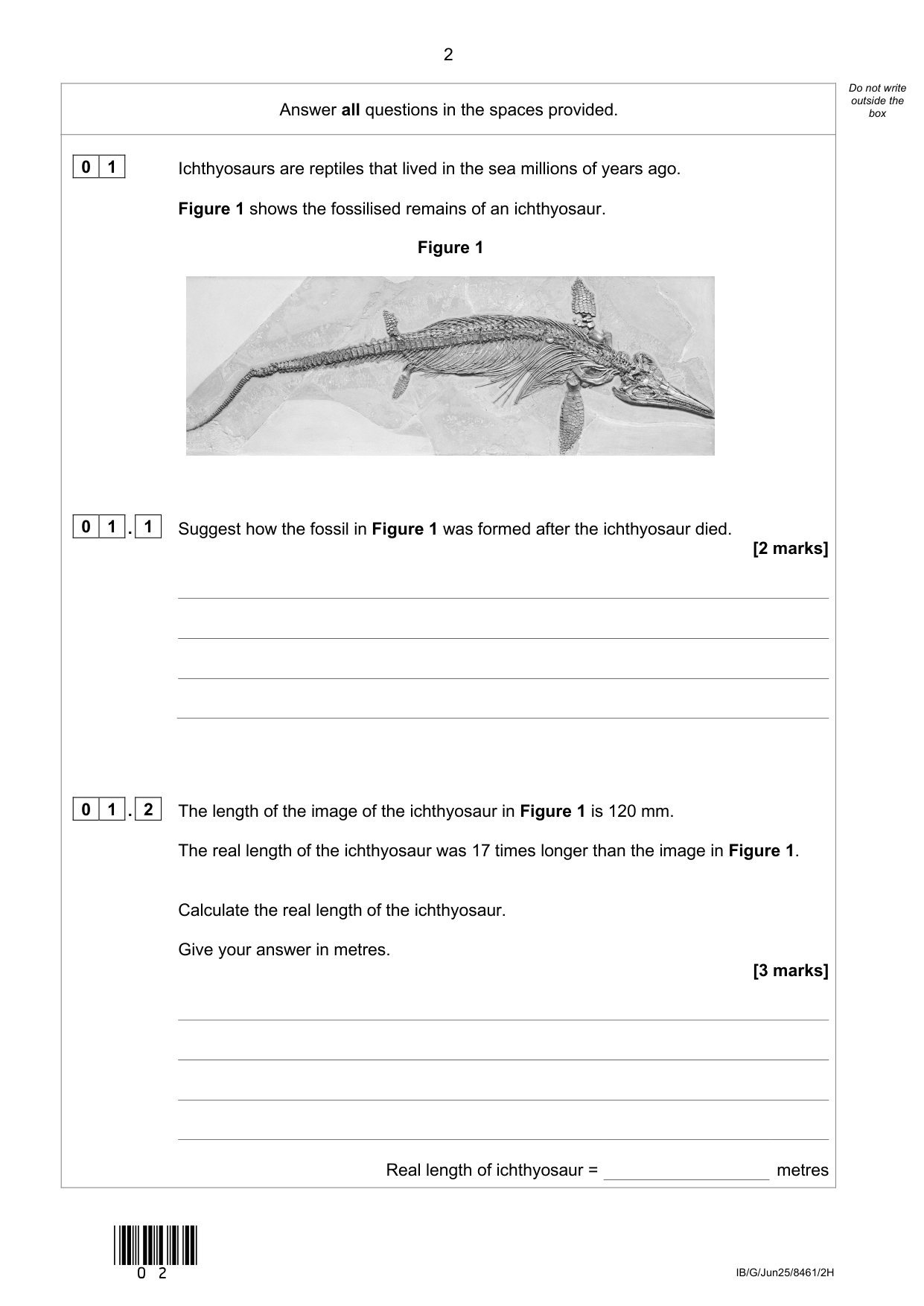
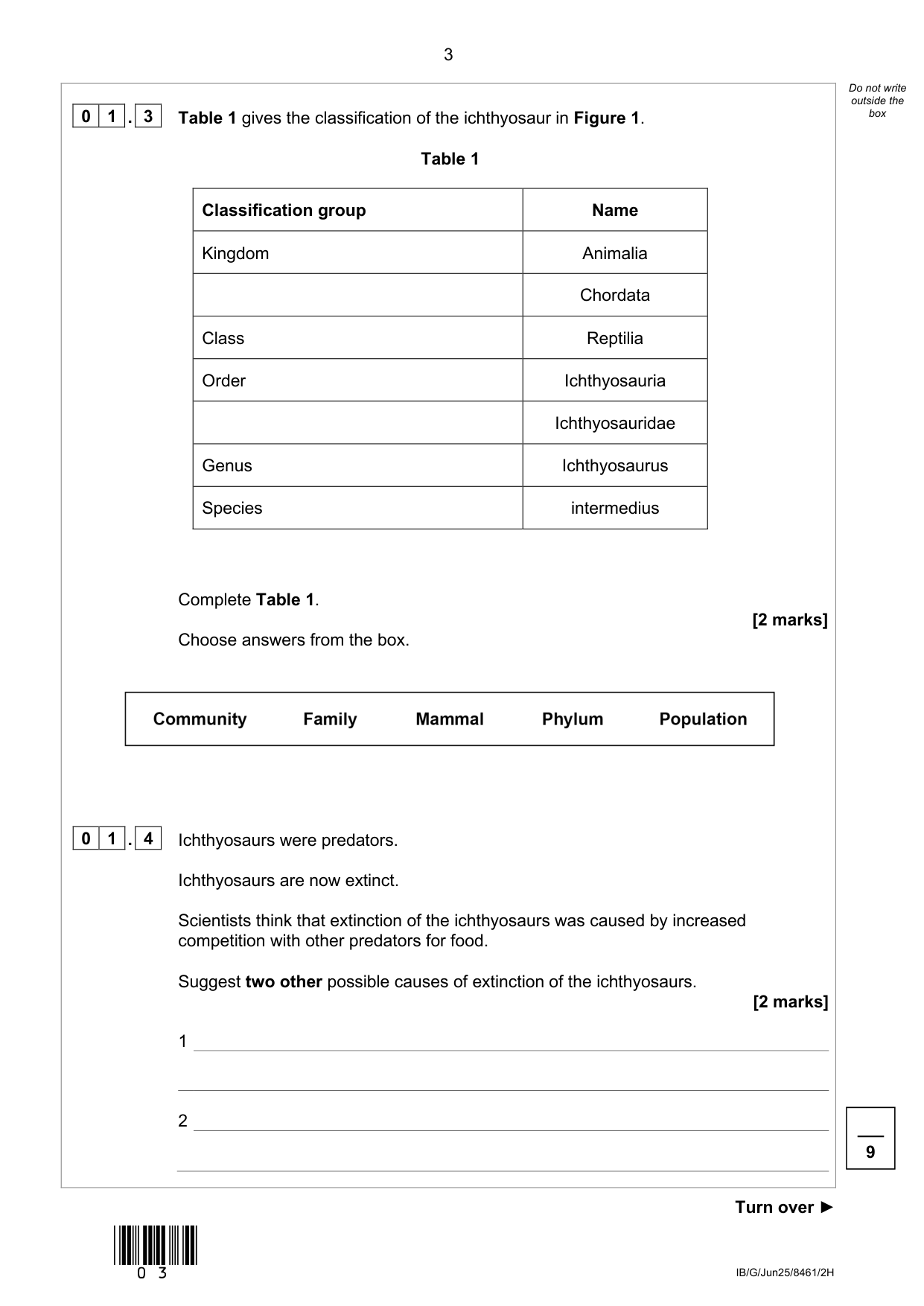
The paper begins with evolution and classification. *Question 1 (pages 2–3)* focuses on ichthyosaur fossils, including fossil formation, classification hierarchy (kingdom to species), and causes of extinction such as environmental change and competition between predators.
Ecology and fieldwork skills are tested in *Question 2 (pages 4–7)* through an investigation into daisy plant distribution at different distances from a tree. Students calculate soil water percentage from fresh and dried soil masses (*Table 2, page 6*) and evaluate how abiotic factors affect plant growth.
Plant responses and hormones are covered in *Question 3 (pages 8–10)*. Students explain geotropism, plan a phototropism investigation using seedlings and directional light, identify the hormone controlling growth responses, and explain how light responses improve plant survival.
Human hormones and genetic engineering appear in *Question 4 (pages 11–13)*, including the role of the pituitary gland, why human growth hormone (hGH) must be injected rather than swallowed, and how scientists transfer the hGH gene into bacteria for large-scale production.
Environmental biology is explored in *Question 5 (pages 14–15)*, where students explain the importance of peat bogs, biodiversity, and the local and global effects of habitat destruction.
Inheritance and reproduction are major themes in *Question 6 (pages 16–19)*. Topics include mitosis and meiosis in sperm formation, chromosome inheritance, and comparisons between sexual and asexual reproduction in strawberry plants using runners, flowers, fruits, and seeds.
The nervous system is assessed in *Question 7 (pages 20–23)* using a ruler-drop reaction time experiment. Students calculate mean reaction time using a physics-style equation, evaluate investigation methods, and explain how the nervous system coordinates responses to stimuli.
Genetics and protein synthesis are tested in *Question 8 (pages 24–28)* with Himalayan rabbits. Students complete Punnett square diagrams, explain how DNA base changes affect enzyme structure and melanin production, and analyse temperature-sensitive enzyme activity in fur colour development.
The final section, *Question 9 (pages 29–31)*, focuses on Type 2 diabetes. Students interpret data on obesity and diabetes prevalence, analyse drug investigations using Hb-G measurements, and evaluate treatment effectiveness and investigation design in a 6-mark extended-response question.
Use this paper to practise under real exam conditions, strengthen data analysis and practical skills, and improve extended-response techniques. Pair it with the AQA 8461/2H June 2025 mark scheme for complete exam preparation.
This document is designed for GCSE Biology students preparing for the 2026 exam series, particularly Year 11 students studying the AQA 8461 Higher Tier specification, as well as resit candidates and independent learners.
It is also ideal for teachers, tutors, and revision providers who need authentic exam material for mocks, timed assessments, and exam-technique practice. It supports revision across ecology, genetics, inheritance, and human response systems.
Get The Official AQA GCSE Biology Paper 2 Higher Tier Mark Scheme For The June 2025 E...
Download AQA GCSE Biology 2h (8461/2h) June 2025 Question Paper Pdf. Instant Access.

Download AQA GCSE Biology 1h (8461/1h) June 2025 Mark Scheme Pdf. Instant Access.
Download AQA GCSE Biology 1h (8461/1h) May 2025 Question Paper Pdf. Instant Access.