



AQA / AS Level
AQA As Geography Paper 1 2025 Mark Scheme
Access the official AQA AS Geography Paper 1 mark scheme for the June 2025 exam (7036/1). This document provides detailed examiner guidance, model answers, and level-based marking criteria used to assess student responses in the Physical Geography and People & Environment paper.
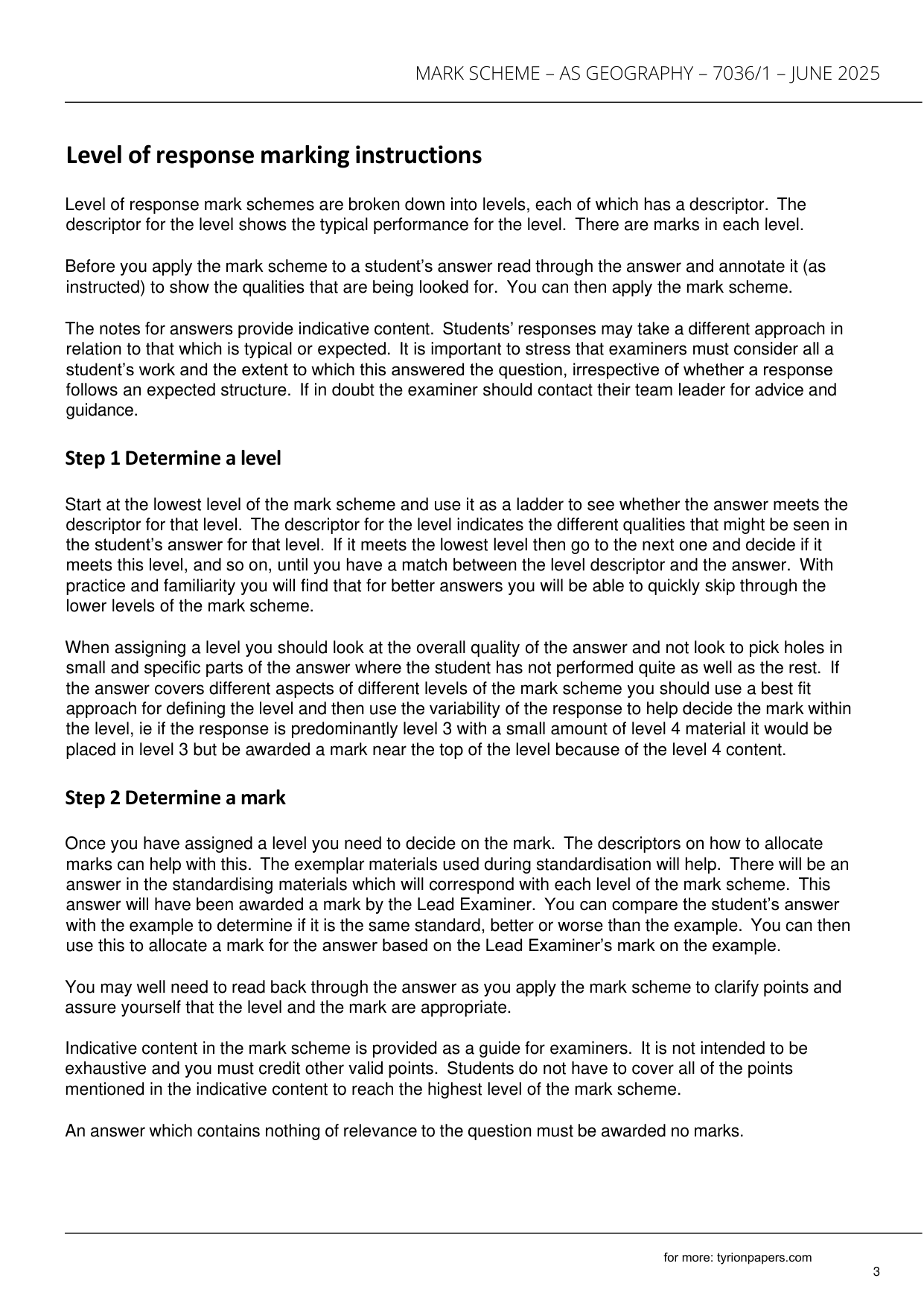
The mark scheme explains how answers are graded using a level-of-response system, where examiners assess overall quality before assigning marks. As outlined on page 3, responses are judged using a “best fit” approach, rewarding clarity, application of knowledge, and analytical depth rather than strict structure.
Section A covers core physical geography topics. Early questions include correct answers such as urban hydrographs having short lag time and high peak discharge (page 4), and evapotranspiration defined as the transfer of water from land to atmosphere via evaporation and transpiration. Data-response questions require analysis of figures, such as carbon storage across biomes, where tropical forests store the largest total carbon (~550 GtC), significantly more than other biomes (page 5).
Higher-mark questions assess analytical and evaluative skills. For example, Question 01.5 requires assessment of human impacts on carbon stores in the hydrosphere, including ocean absorption of CO₂ and climate feedback mechanisms (pages 6–7). The 20-mark essay (Question 01.6) evaluates human impacts on the tropical rainforest water cycle, with Level 4 responses requiring detailed evaluation, case study use, and strong conceptual understanding (page 9 marking grid).
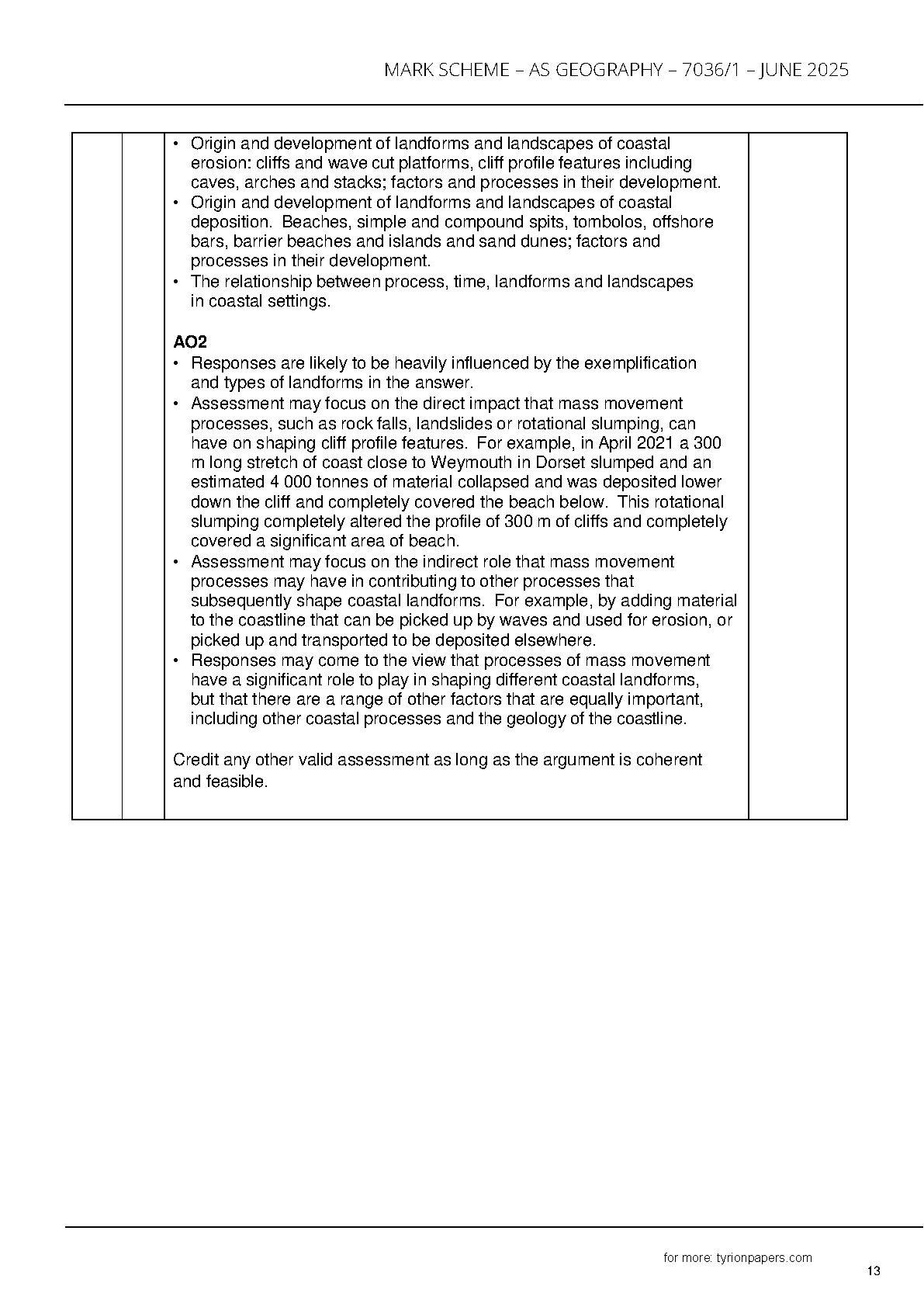
Section A options also include coastal and glacial systems. The mark scheme highlights processes such as longshore drift transporting sediment in a zig-zag pattern (page 10) and abrasion in glacial environments involving debris eroding valley floors (page 16). Extended responses assess mass movement in coastal landscapes and long-term sea level change impacts over 10,000 years.
Section B focuses on hazards and urban environments. Answers include tropical storm formation conditions such as sea temperatures above 27°C and low wind shear (page 23). Data interpretation questions analyse earthquake risk versus population density in Thailand (page 24), while urban questions explore heat island effects and green space distribution in New York City (page 31).
Essay questions assess real-world application and evaluation. Topics include wildfire impacts on place characteristics (page 25), adaptation in multi-hazard environments (page 27), and urban environmental issues such as pollution and waste in cities like Mumbai (page 33). The final essay evaluates how urbanisation alters the water cycle, including runoff, storage, and drainage systems (page 34).
Use this mark scheme to understand how answers are graded, improve exam technique, and learn how to structure high-level responses for the 2026 AQA AS Geography exams.
This document is designed for AS Geography students preparing for exams, especially those revising for the 2026 AQA assessment.
It is also highly useful for teachers, tutors, and revision centres who want to understand examiner expectations, grading criteria, and how to award marks accurately.
Download AQA As Geography Paper 2 2025 Mark Scheme (7036/2). Full Answers And Examine...
Download AQA As Geography Paper 2 2025 (7036/2). Full Question Paper On Human Geograp...
Download AQA As Geography Paper 1 (7036/1) May 2025 Question Paper Pdf. Free Instant...